Last updated: November 2026
Your NDIS plan shows a total budget, but that doesn't mean all of it can be spent today. Funding periods set when each part of your funding becomes available and how long it needs to last.
This guide explains how funding periods work, what happens to money you don't spend, and the 2026 rule changes that affect how you and your providers claim.
Key points at a glance
- Your total budget does not change. Funding periods only change when funding becomes available.
- Most supports are released every 3 months. Some are monthly, six-monthly or yearly.
- Unspent funds roll over to the next funding period in the same plan.
- You can't borrow from a future period, but you and a provider can agree to delay a claim until the next one opens.
- From 1 December 2026, claims must be lodged within 90 days of the support being delivered.
- From 1 February 2027, unspent funds will not carry into a renewed plan.
What are NDIS funding periods?
A funding period is a set block of time in your plan. At the start of each block, a portion of your budget is released for you to spend.
Think of it like a pay cycle. Rather than receiving a full year of funding on day one, you receive a share at regular intervals across your plan.
Funding periods can apply to:
- your whole plan budget, or
- individual funding components (for example Core, Capacity Building or Capital), each with its own schedule.
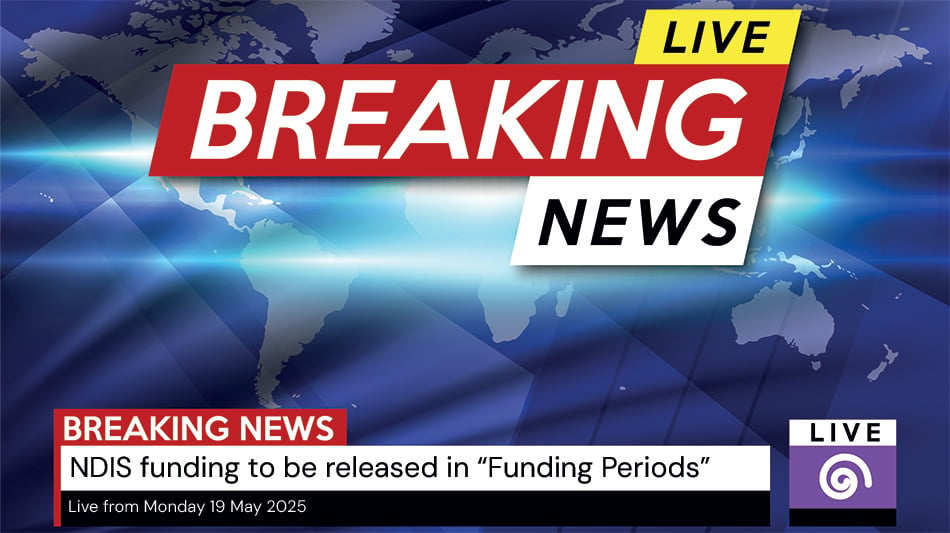
They have been introduced gradually into new and reassessed plans since 19 May 2025. If you are on an older plan that has continued unchanged, yours may look different until your next plan.
Is my total NDIS plan budget available straight away?
No. The total covers your whole plan. Funding periods control how much of it you can access at any point.
Example: A 12-month plan has $12,000 in one funding component, released over four periods. You can use $3,000 in the first period, not $12,000.
Having funds available also doesn't make every purchase claimable. The support still needs to be an NDIS support that fits the funding component it is claimed from.
Why did the NDIS introduce funding periods?
The NDIA's stated aim is to help participants make their budget last for the full length of the plan.
- Less risk of running out early. A large budget spent in the first few months can leave gaps in support later.
- Easier tracking. Smaller amounts over shorter timeframes are simpler to monitor.
- Protection from overcharging. A provider cannot draw down a full year of funding in one go.
How long are NDIS funding periods?
The NDIA says funding periods are usually three months, but not every period is quarterly. The length depends on the type of support and your circumstances, and one plan can contain several different funding periods.
| Funding period | Usually applies to |
|---|---|
| Monthly | Supported Independent Living (SIL), Specialist Disability Accommodation (SDA) and plan management fees |
| 3 months (quarterly) | Most supports, including Core and Capacity Building |
| 6 months | Often used for smaller plans |
| Up front or 12 months | High-cost one-off items such as assistive technology and home modifications |
Some supports are front-loaded. More funding is released early in the plan to cover costs such as assessments, a behaviour support plan or initial set-up, with smaller amounts after that.
When does each funding period start?
Funding periods run from your plan start date, not the calendar month or the financial year.
Example: Your 12-month plan starts on 10 February with quarterly funding periods. New funding is released on 10 February, 10 May, 10 August and 10 November.
The full amount for a period is available from its first day.
Where can I check my NDIS funding periods?
You can see your funding periods in three places:
- your NDIS plan document (schedule and amounts, but not live balances)
- the my NDIS participant portal
- the my NDIS app
Before you book a support, check:
- the start and end date of the current funding period
- how much has been released and when the next release is due
- your available balance, allowing for supports already delivered but not yet claimed.
With your consent, your plan manager and support coordinator can also view your funding periods. Most other providers cannot see them unless you share them.
What happens to unspent NDIS funding?
Within your plan: it rolls over
Anything you don't use in one funding period is added to the next one automatically. You don't need to ask.
Example: You have $3,000 available and use $2,500. The remaining $500 carries forward. When the next $3,000 is released, you have $3,500 to use.
At the end of your plan: it depends on what happens next
- New plan: unspent funds do not transfer. Your new budget is based on your support needs, not on what was left over.
- Continued plan: under current plan-continuation arrangements, unspent funding can stay available because your existing plan keeps running.
- Renewed plan (from 1 February 2027): plan renewals are scheduled to replace continuations. Unspent funds will not carry into a renewed plan.
Can I borrow from a future funding period?
No. Funding that hasn't been released can't be accessed early. Once the funds available in a period are used, no further claims can be paid until the next release.
The exception: agreed delayed claiming
Current NDIA guidance, updated in September 2026, lets a claim be held and paid from your next funding period when:
- you and your provider both agree to it
- your provider is willing to wait for payment
- you will still have enough funding for the supports you need in the next period and the rest of your plan.
Example: Mia has $1,500 per quarter for therapy. An intensive block costs $1,900. Her therapist agrees to hold the extra $400 and claim it when the next quarter opens. Mia then has $1,100 left for therapy in that quarter.
Keep in mind:
- This does not bring future funding forward. It only delays the claim.
- The invoice must still show the real date the support was delivered.
- You can never claim more than the total in your plan.
How long do I have to claim? The 90-day rule from 1 December 2026
A 90-day claim deadline is scheduled to apply from 1 December 2026. Claims will need to be submitted within 90 days of the support being delivered, down from up to two years.
Holding a claim until the next funding period does not extend the deadline. Our guide to the NDIS 90-day claiming rule explains who it applies to and what to do now.
- Plan-managed: send invoices to your plan manager as soon as you receive them. (Not plan-managed yet? See how to change to plan management.)
- Self-managed: lodge your claims regularly rather than in batches.
- All participants: ask providers to invoice promptly, ideally weekly or fortnightly.
What should I do if my NDIS funding runs out?
- Act early. Contact your plan manager, support coordinator or my NDIS contact as soon as you see funds running low.
- Check what's owing. Look at unpaid invoices and upcoming bookings before agreeing to any more spending.
- Talk to your providers. Ask about spreading sessions more evenly, pausing briefly, or delayed claiming.
- Call the NDIA on 1800 800 110 to discuss whether your release schedule fits your support needs.
- Agree on payment first. If a support won't be covered, be clear about who pays before it starts, or you may be billed personally.
Running out of funds does not guarantee extra funding. A significant, ongoing change in your needs may justify a reassessment. A crisis, emergency or fraud may support a plan variation.
Can I change my NDIS funding periods?
You can ask. If your funding periods don't match how you use your supports (for example, you need more help during school holidays), raise it with the NDIA or at your next reassessment.
The NDIA looks at:
- your support needs and how they change across the year
- how you have used funding in the past
- any risks to you of releasing funding in larger amounts.
Changing the timing of your funding is different from asking for more funding. An increase to your total budget requires a reassessment, and plan changes are subject to the current rules.
Should I tell my providers about my funding periods?
It is your choice, but sharing the basics usually prevents problems.
- Tell each provider how much is available for their service in each period.
- Ask them to schedule supports to fit that amount.
- Record the arrangement in your service agreement, including what happens if funds run short.
- If several providers share one budget, make sure each knows their share.
5 tips for managing your funding periods
- Diarise your release dates. Know the date each new period opens.
- Check your balance monthly in the my NDIS app or with your plan manager.
- Work out your hours per period. Our NDIS budget calculator shows how many hours of support each release will cover.
- Plan ahead for busy times. Underspend slightly in quiet periods so funds roll over for when you need more. See more ways to make your NDIS funding go further.
- Don't sit on invoices. The 90-day deadline is strict.
Frequently asked questions
Do funding periods mean I get less NDIS funding?
No. Your total plan budget is the same. Funding periods only control when each portion becomes available.
Can a provider change the service date on an invoice to fit the next funding period?
No. The date on the invoice must be the date the support was actually delivered. Only the date the claim is lodged can move.
Do funding periods apply to self-managed participants?
Yes. Funding periods apply whether your plan is self-managed, plan-managed or NDIA-managed.
Is assistive technology funding released in instalments?
Usually not. Funding for high-cost items such as assistive technology and home modifications is generally released up front so you can buy the item when you need it.
Is my funding being cut because of funding periods?
No. Funding periods change timing only. Separately, budgets for social and community participation and daily living skills are being reset when plans are reassessed or renewed. Read about the 2026 NDIS funding changes.
Who decides how long my funding periods are?
The NDIA decides, based on NDIS law, the type of support and your circumstances. You can discuss your preferences at your planning conversation.
Will funding periods change under the new NDIS planning framework?
Funding periods are expected to continue. New framework plans, built from a support needs assessment with a larger flexible budget, are scheduled to start rolling out from 1 April 2027. See our guide to the new NDIS laws for the full timeline.
Related NDIS changes
- NDIS 90-day claiming rule: when do you need to submit claims?
- NDIS funding changes in 2026: social participation and daily living skills
- New NDIS laws 2026: what participants need to know
- Plan renewals replace NDIS plan continuations
- The new NDIS plan suspension rule
- New NDIS record keeping rules for participants and nominees
- Providers: Top 5 things providers need to know about the 2026 NDIS changes
Need help finding supports?
Finding providers who are available when your funding is released can be the hardest part. The free MyCareSpace Connections service matches you with verified local support workers and therapists who have capacity now, and can help you explore plan manager options.
Call us on 1300 2888 93, or check current rates with our NDIS price search.
MyCareSpace is not a plan manager and does not process claims or approve funding changes. This article is general information only. Check your own plan and current NDIA guidance for your situation.