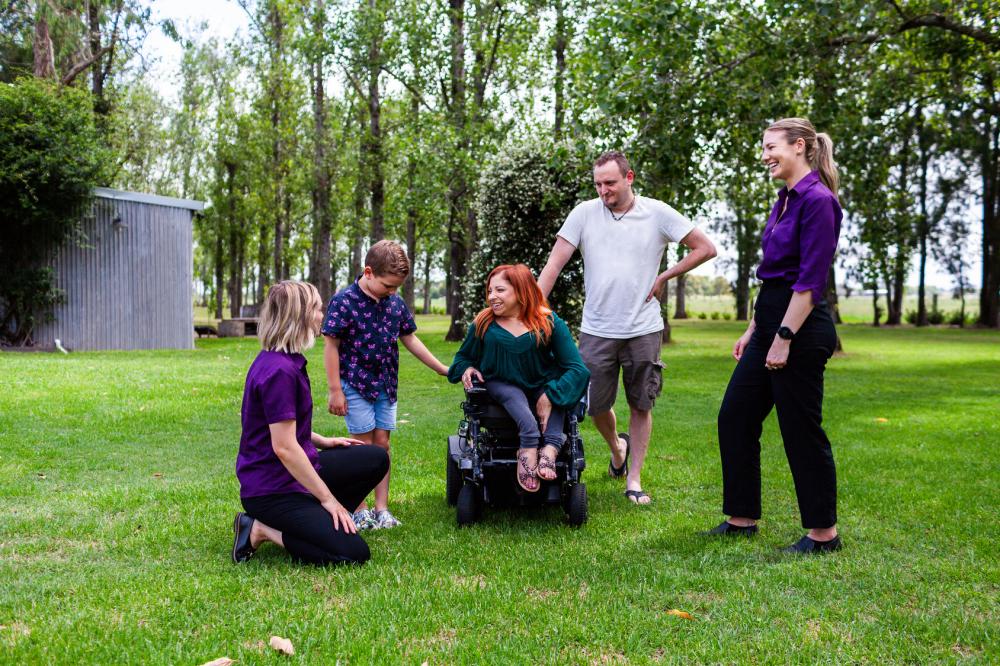
We’ll connect you with Behaviour Support Practitioners
Behaviour Support Practitioners are specialists who work with people who have complex behavioural and emotional support needs.
MyCareSpace has trusted providers who will work closely with you and your support network to improve your quality of life and give you the tools you need to effectively communicate your thoughts and emotions.
Our friendly team will connect you with Behaviour Support Practitioners.

Is Behaviour Support covered by the NDIS?
Behaviour support can be funded by the NDIS and it is a stated support. This means that you can access behaviour support if you have the funding category ‘Improved Relationships’ under the ‘Capacity Building’ budget in your plan.
How Behaviour Support Practitioners can help
Behaviour Support Practitioners use evidence-based practices to develop plans that support people with complex behaviours.
They will support people in areas of communication, social inclusion and emotional regulation.
Behaviour support practitioners will create positive behaviour support plans. This will ensure that your parents, support workers, carers, teachers or employees can give you the best possible support.
Behaviour Support Practitioners funded by the NDIS can support you by:
- Introducing you to tools and resources that can assist with emotional regulation and support positive behaviour
- Helping improve your mental health and well-being Supporting you to develop skills to reduce stress
- Teaching you proactive techniques to assist you with sensory overload Improving your performance in the workplace or at school
- Exploring necessary tools that allow you to interact safely with others Increasing independence
- Evaluating your specific needs and creating a positive support plan for support workers and carers
- Teaching you sensory processing skills
- Working alongside your other allied health providers to ensure you have a holistic support plan

Services provided by Behaviour Support Practitioners
- Behaviour Support Plan
Create a detailed plan specific to your behavioural support needs. This will outline strategies and techniques that allow others to support you effectively.
- Parent and carer training
Skill development for family members, friends and caregivers improving the quality of informal support.
- Mental health support
Develop strategies and support programs to improve your mental health.
- Capacity Building
Develop your skills so you can achieve everyday goals important to you, such as regular self-care.
- Tools and resources
Set you up with tools and resources to help you navigate your school, work and home life.
- Relationship skills
Improved social and communication skills necessary to build and maintain relationships.

Benefits of Behaviour Support
- Increased confidence in communicating emotions
- Improved relationships with friends and family
- Improved performance at work or in school
- Increased well-being and confidence in social settings
- Reduced self-harming behaviour
- Increased participation and inclusion within the community
- Improved quality of life Increased self-regulation skills
How MyCareSpace works
We’re both an online platform and a helpful team of people in your corner. Rely on us to find top quality NDIS therapy providers based on what’s important to you.

Trusted by Over 80,000 Australians
Stress Taken Away
"They took the stress and puzzle of finding compatible providers off our hands and got us started quickly on our NDIS plan."
NDIS Participant’s Family Member

Helped In Days
"I was so tired of finding waiting lists wherever I went. MyCareSpace had me booked into an OT and Physio in days."
Alex, NDIS Participant
Helping Australians Find the Right NDIS Support
NDIS Experts You Can Trust
MyCareSpace connects you with our specialist Connections Team, experienced NDIS experts who understand the system, the pathways, and the real challenges participants and families face.
Our Connections Team has access to a large, Australia wide database of verified NDIS providers. They know how the system works and how to match people with the right supports, in the right location, with availability. By managing the search and connections for you, we remove unnecessary stress and help you move forward with confidence and focus on achieving your goals.

Related Behaviour Support Resources
Explore More on NDIS Behaviour Support

What is the Difference Between Psychology vs Behaviour Support: What's the Difference in the NDIS? and Positive Behaviour Support in the NDIS?
A practical comparison of Psychology and Behaviour Support under the NDIS, including their different roles, funding categories and provider requirements.
Who Can Deliver Positive Behaviour Support in the NDIS? (2026 Guide)
This guide explains the current NDIS requirements, including the latest updates to practitioner suitability guidance in April 2026 and the new NDIS Commission Portal introduced on 12 October 2026.
NDIS Behaviour Support: A Complete 2026 Guide
This guide explains how NDIS Behaviour Support works, what a Behaviour Support Plan includes, who can provide specialist Behaviour Support and how to access NDIS funding. It also covers the latest 2026 NDIS Behaviour Support rules and changes.
A guide to Behaviour Support Plans in the NDIS
Here's when you need a Behaviour Support Plan, who can prepare one and how often it needs to be reviewed under the latest 2026 NDIS rules.
How to get Behaviour Support (PBS) in my NDIS Plan
Practical advice from Plan Hero's NDIS plan managers on Behaviour Support funding, common goals, evidence requirements and managing your budget.
Behaviour Support in Practice: Examples and Outcomes
A detailed explanation of how Behaviour Support actually works in the NDIS.
Frequently Asked Questions
Use the MyCareSpace Directory
Browse Behaviour Support Practioners by Suburb